
 English
 العربية
 Deutsch
 español
 français
 italiano
 português
 русский
 Türkçe
 Tiếng Việt
Reactive Power Converter: Convert VAR, kVAR, MVAR & GVAR
Enter a reactive power value, pick its unit and see it in every other unit at once. Free, no signup.
Convert VAR, kVAR, MVAR and GVAR Instantly
Capacitor banks are sold in kVAR, grid reports quote MVAR and meter data comes in VAR. This free reactive power converter turns a value in one unit into all the others in one click, so you can compare equipment ratings and network figures without manual math.
Read more
What Is Reactive Power?
Reactive power is the power that moves back and forth between the source and inductive or capacitive loads, such as motors, transformers and capacitors. It does no useful work, but it is needed to build the magnetic and electric fields those devices run on. Its unit is the volt-ampere reactive (VAR).
Reactive Power Units at a Glance
Here are the five units the converter supports.
| Unit | Symbol | In VAR |
|---|---|---|
| Millivolt-ampere reactive | mVAR | 0.001 VAR |
| Volt-ampere reactive | VAR | 1 VAR |
| Kilovolt-ampere reactive | kVAR | 1,000 VAR |
| Megavolt-ampere reactive | MVAR | 1,000,000 VAR |
| Gigavolt-ampere reactive | GVAR | 1,000,000,000 VAR |
Watch the case: lowercase mVAR is milli, capital MVAR is mega. 1 MVAR = 1,000 kVAR.
Active, Reactive and Apparent Power
AC power has three parts, linked by the power triangle. Real (active) power P, in kW, does the work. Reactive power Q, in kVAR, supports the fields. Apparent power S, in kVA, is what the supply must deliver: S² = P² + Q². Power factor is the ratio PF = P ÷ S. A low power factor means more reactive power and more current for the same useful work.
Reactive Power Formula
For a single-phase circuit, Q = V × I × sin φ. For three-phase, Q = √3 × V × I × sin φ. If you know real power and power factor, the kVAR formula is: kVAR = kW × tan(cos⁻¹ PF). Example: 100 kW at a 0.8 power factor needs 75 kVAR, and the apparent power is 125 kVA.

kW to kVAR and kVA to kVAR
To go from kW to kVAR, use the formula above. To go from kVA to kVAR, use kVAR = √(kVA² − kW²). A 50 kVA load drawing 40 kW has √(2,500 − 1,600) = 30 kVAR.
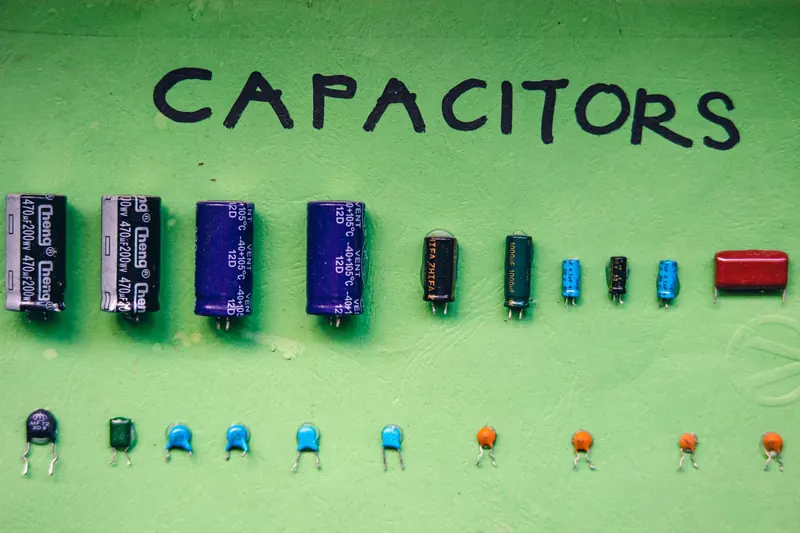
Reactive Power Compensation and Capacitor Sizing
Utilities often charge for low power factor, so sites add capacitor banks to supply reactive power locally. The kVAR needed is kW × (tan φ1 − tan φ2). Raising a 100 kW load from 0.80 to 0.95 power factor needs about 42 kVAR of capacitors. Reactive energy over time is billed in kVARh.
How to Use the Reactive Power Converter
Enter your value
Choose the unit you have
Click Convert
Reset for the next value
Reactive Power Converter FAQs
Everything about VAR, kVAR and reactive power.
What is kVAR?
What is the unit of reactive power?
How do I convert kVAR to kW?
How do I calculate kVAR from kW?
What is the difference between kW, kVA and kVAR?
How many kVAR are in an MVAR?
What is kVARh?
Is this reactive power converter free?
Converting real power as well?
Switch between watts, kW, MW and GW with our Power Converter.
Power Converter
Raheel Jakhura
CEO / Co-Founder
Our goal is to provide online free tools so you don't have to install any software for basic usages. We are trying to add more tools and make these tools free forever.
